Home / Nickel Alloys / Forged Fittings
Nickel Alloys Forged Fittings
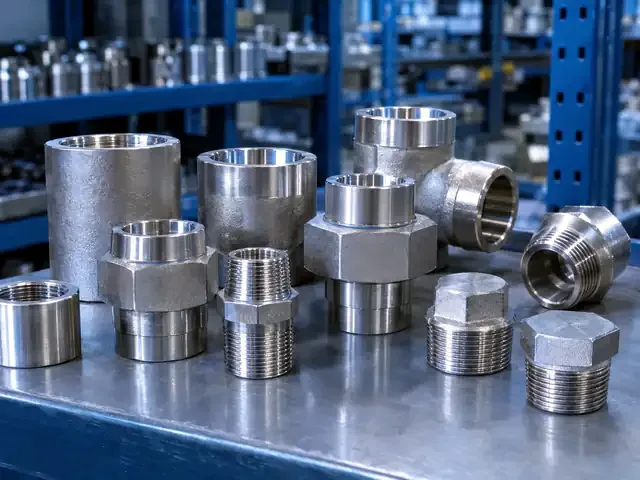
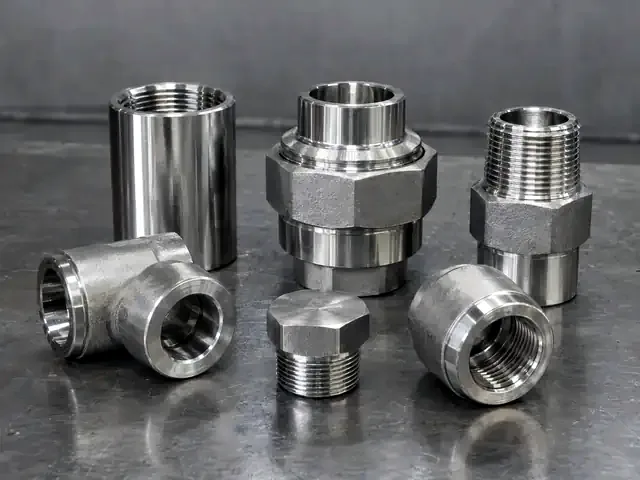
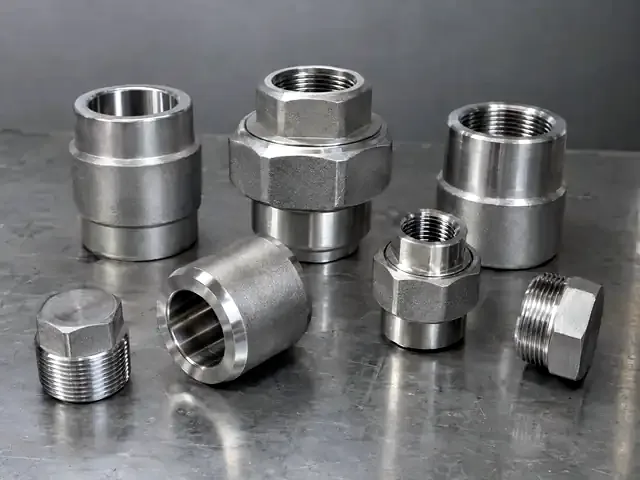
Nickel Alloys forged fittings are the small-bore forged fittings used on instrument, drain, vent and utility lines. Commercially pure nickel for caustic and reducing environments.
Typical use for Nickel Alloys: caustic soda, food processing, chemical. The right grade, form and finish depend on the process fluid, temperature, pressure and the code your project follows, so we quote against your specification rather than a catalogue default.
Metalex Piping Solution, Mumbai, supplies Nickel Alloys forged fittings for India and export orders. Send us the details in the checklist below and we will check availability and confirm what can be offered. Grade, dimensions and certificates are confirmed on the quotation.
At a glance
| Material | Nickel Alloys |
|---|---|
| Grades | Nickel 200, Nickel 201 |
| Standards (typical) | ASTM B564 |
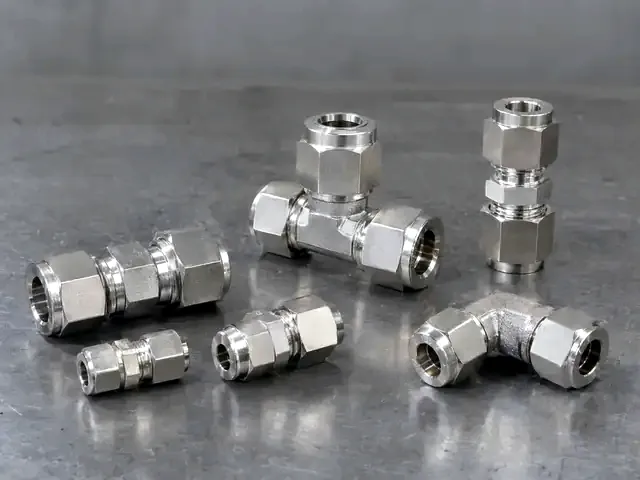
| Types | Couplings (full and half), unions, elbows, tees, crosses, plugs, bushings, nipples and swage fittings |
| Dimensions | ASME B16.11 for socket weld and threaded; MSS SP-83 for unions |
| Ends | Socket weld or threaded (NPT) |
| Finish | Machined and cleaned |
| Documentation | Mill test certificate (EN 10204 3.1) and inspection on request. Confirm on enquiry. |
Standards are typical for this product. The exact standard, grade and tolerance are confirmed against your enquiry.
Tell us this much
- Fitting type
- Size and pressure class (2000, 3000, 6000, 9000)
- Socket weld or threaded end
- Quantity per type
- Heat number and certificate requirement
What to know about forged fittings
- Forged fittings are small bore (usually up to 4 inch) and come in 2000, 3000, 6000 and 9000 pound classes.
- Socket weld fittings are welded into a recess; threaded fittings screw on, typically with NPT threads.
- Typical range: couplings, half couplings, unions, elbows, tees, crosses, plugs, bushes and caps.
- Suited to high pressure service where the line size is small.
Nickel Alloys at a glance
Nickel alloys such as Nickel 200 and 201 are very resistant to caustic alkalis and are used where purity and corrosion resistance matter, in chemical, food and electronic applications.
- Resistant to caustic soda and alkalis
- Good thermal and electrical conductivity
- Retains toughness at low temperature
- Nickel 200 and 201 are the common grades
Where forged fittings are used
- Instrument and sample lines
- High pressure hydraulic and steam lines
- Small bore process piping
- Drain, vent and utility connections
Common questions
Socket weld or threaded?
Socket weld gives a stronger, more leak-resistant joint and is preferred for high pressure or hazardous fluids. Threaded is quicker to fit and suits low risk service where dismantling is needed.
What does the 3000 or 6000 class mean?
It is the pressure class of the forged fitting. Higher class means a thicker body and a higher allowable pressure.
What do you need to quote?
Type, size, end connection, pressure class, material grade and quantity.